
Checking your tires for clear warnings that it’s time for new ones is more important than some people think.
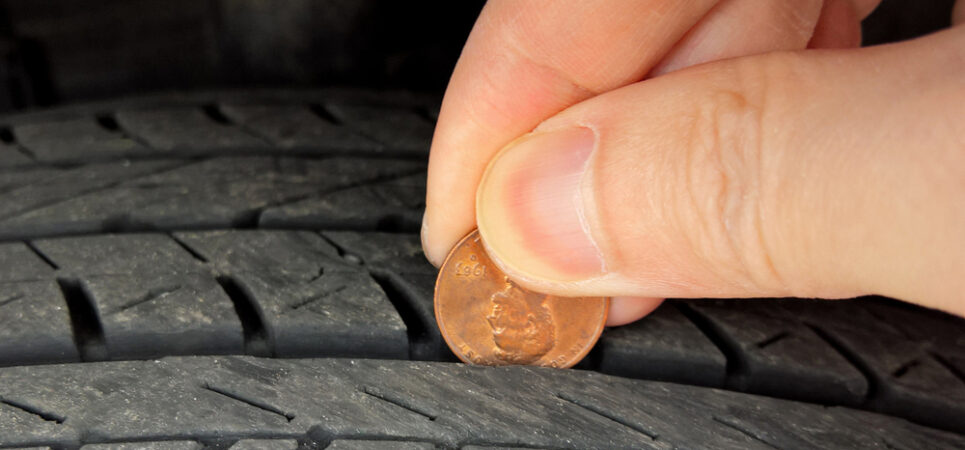
Many people are aware of The Penny Test, and still use it today. It is a good way to determine when you need new tires.
According to the U.S. Department of Transportation, and since tires are measured in 32nds, it is recommended that tires are replaced when they reach 2/32”, so the idea of the penny test is to check when you hit the 2/32” threshold.
The Penny Tire Test works by placing a penny between the tread ribs on your tire. A “rib” is the raised portion of tire tread that spans the circumference of your tire. Make sure to turn the penny so Lincoln’s head points down into the tread. See if the top of Lincoln’s head disappears between the ribs. If it does, your tread is still above the 2/32” threshold. If you can see Lincoln’s entire head, it’s probably time.
It is not necessary to check each tire, but rather various places around the tire, especially any areas which the tire looks visibly worn.
Being that 2/32” is the bottom-line recommendation for replacement, it’s probably time to start looking into tire options when the threshold is at 6/32” or 4/32”.
Here are some important tire safety things to look for, which can help when determining and considering if it’s time for new tires.
Bulges, Gouges or Cracks
When a tire deflates, it can bulge at the sides, so it’s a clear sign of low tire pressure or a slow air leak if you see this.
Tread Wear
As mentioned, the old school Penny Test will help you determine tread wear.
Tire Pressure
Tires deflate at a rate of one pound per square inch (PSI) per month. Always check that you have the right inflation in each tire. If your tires are deflating at a faster rate, you may have a problem.
Temperature Changes
Tires lose pressure in the cold and heat up during summer. If you are driving long distances in hot weather with an underflated tire, you could be in trouble. If your tire is not holding pressure, don’t risk driving in extreme heat as it will generate more heat and wear out even faster.
Vibration
Any sort of vibration or thumping is not a good sign. If it’s coming from directly under the back seats, it may mean tires are out of balance. Vibration from the steering wheel could mean suspension issues.
Still not sure if it’s time for new tires?
Let the tire experts at Tucker Tire help you shop for the best tire type. Reach out or head on over to our shop, and we’ll get you taken care of.